
NEWS
The cameras were mistakenly left on before the interview started, capturing Trump looking extremely unwell as he adjusted his mask, huffed and puffed, struggled to breathe, and rushed to finish the interview, but what the microphone captured raised even bigger questions

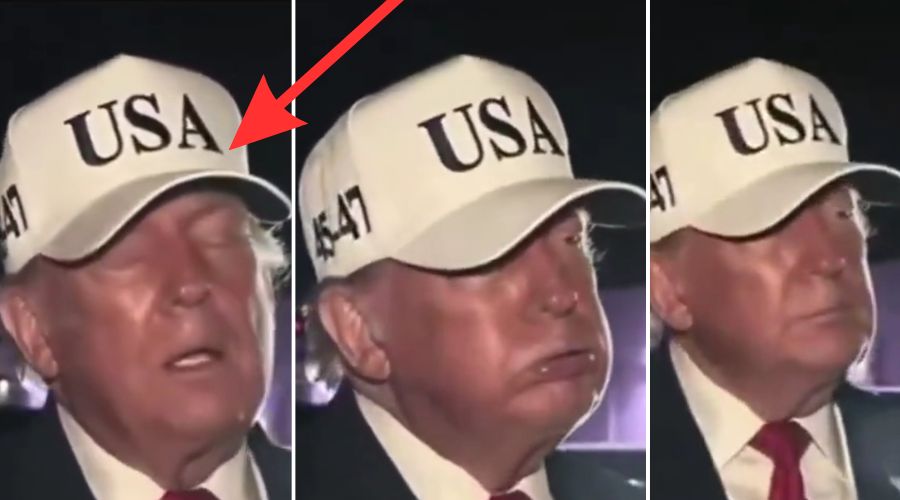
An unexpected moment involving Donald Trump has drawn attention following claims that cameras were accidentally left running before a recent interview, capturing something viewers were not expecting.
The footage has been described as showing Trump adjusting his mask, appearing uncomfortable, and taking several noticeable breaths before the interview officially began.
What makes the situation particularly interesting is the suggestion that the cameras continued recording while Trump prepared himself for the conversation.
Rather than beginning with the usual confident appearance associated with his public interviews, the alleged recording has prompted questions about what happened behind the scenes.
Trump has spent years appearing before television cameras, addressing journalists, attending political events, and delivering speeches to audiences across the United States.
His public appearances often attract considerable attention because viewers closely examine his expressions, movements, clothing, and even the smallest details surrounding his appearances.
However, the latest claims have shifted attention toward the moments immediately preceding his interview, when he was reportedly preparing for the cameras.
According to the description circulating alongside the story, Trump appeared to be adjusting his mask while seemingly struggling with his breathing.
The recording has also been described as showing him huffing and puffing, creating an impression of discomfort shortly before the interview began.
Those details have raised curiosity about whether something unexpected happened before the conversation officially started, although the footage needs independent verification.

The suggestion that Trump was rushing to finish the interview has added another layer of interest to the claims.
For viewers, the timing is particularly important because moments recorded before an interview can sometimes reveal a different atmosphere from the carefully prepared conversation that follows.
Television interviews usually involve preparation, camera adjustments, microphone checks, and conversations between production staff and guests before recording officially begins.
During those moments, guests may adjust their clothing, check their appearance, speak with their assistants, or prepare themselves for questions.
However, when cameras remain active unexpectedly, ordinary preparation can become the subject of public discussion.
Trump’s appearance has frequently generated conversations about his energy, physical movements, and ability to maintain his demanding schedule.
As president, he faces an unusually busy routine involving political meetings, public appearances, international discussions, and frequent interactions with journalists.

That demanding schedule makes any claims about his physical condition particularly sensitive, especially when they involve descriptions of breathing difficulties.
Still, an individual’s appearance in a brief recording cannot establish a medical condition, and no diagnosis should be drawn from such footage.
The microphone has also become part of the discussion, with claims suggesting that something captured through the audio raised even bigger questions.
What was allegedly picked up by the microphone is especially important because conversations outside the main interview can sometimes provide additional context.
However, without access to the original audio, it would be impossible to establish exactly what was said or whether the recording captured anything unusual.
The distinction matters because short clips can easily lose important context when separated from the complete interview.
For now, attention remains focused on the alleged moments before the interview, Trump’s apparent discomfort, and the questions surrounding the microphone.
The circumstances surrounding the recording will ultimately determine whether the footage reveals anything significant or simply captures an ordinary moment of preparation.
Until the complete recording is available and independently verified, viewers should be cautious about treating the claims as proof of a serious health problem.
Nevertheless, the unusual description has generated curiosity about what happened before the interview began and what the microphone may have captured.
The biggest question remains whether the original footage supports the dramatic claims or whether additional context changes how the entire moment should be understood.

Newly released 7-minute clip shows for the first time Jensen Huang sharing an intimate moment with his alleged Chinese spy lover at a restaurant in May 2025, caught kissing when they thought no one was watching.

The cameras were mistakenly left on before the interview started, capturing Trump looking extremely unwell as he adjusted his mask, huffed and puffed, struggled to breathe, and rushed to finish the interview, but what the microphone captured raised even bigger questions

BREAKING: Donald Trump has a mental breakdown after his speech during a recent interview tonight, as they accidentally forget to turn off his microphone and camera, capturing this

Meghan Markle, 45, spotted sharing a deeply intimate moment with Prince William, 44, at a UK beach without Prince Harry and Kate Middleton, unaware they were being photographed, as one shocking detail about Meghan’s look raises big questions

Taylor Swift nearly chokes Karlie Kloss to death in an overwhelming moment of excitement as they reunite at the Chiefs vs. Jets game after Travis Kelce scores his first touchdown since Week 3.

Taylor Swift and her Mom Andrea Are Here at Arrowhead Stadium for Chiefs VS Jets to support Travis Kelce – Look Who’s Sitting With Them

Taylor Swift Breaks NFL Protocol and Intercepts the Chiefs as They Run Onto the Field for the Chiefs vs. Jets Game to Give Husband Travis Kelce a Good Luck Kiss, Hoping He Won’t Lose for the Third Time

Taylor Swift and Husband Travis Kelce Steal the Spotlight as They Arrive Hand in Hand at Arrowhead Stadium for the Chiefs vs. Jets Game in Kansas City

Prince William, Wife Kate Middleton, and Their Children Prince George and Princess Charlotte Steal the Spotlight Alongside Taylor Swift as They Arrive at Kansas City Airport on Taylor’s Private Jet to Support Travis Kelce at the Chiefs vs. Jets Game at Arrowhead Stadium

BREAKING: Donald Trump’s son Barron breaks silence on what dad secretly makes him do with his mom Melania every night, but completely forgets to prevent the reveal of something shocking and capture this

Breaking: Trump completely shattered after a reporter asks him, “How does it feel to be a loser, Mr. President?” They accidentally forget to turn off his microphone, and it records this after he waddles away without answering the question.
