
NEWS
Trump SHAKEN as House Democrats Drop Article II, Section 4 Impeachment Bombshell, Forcing Republicans on Record Ahead of the Midterms

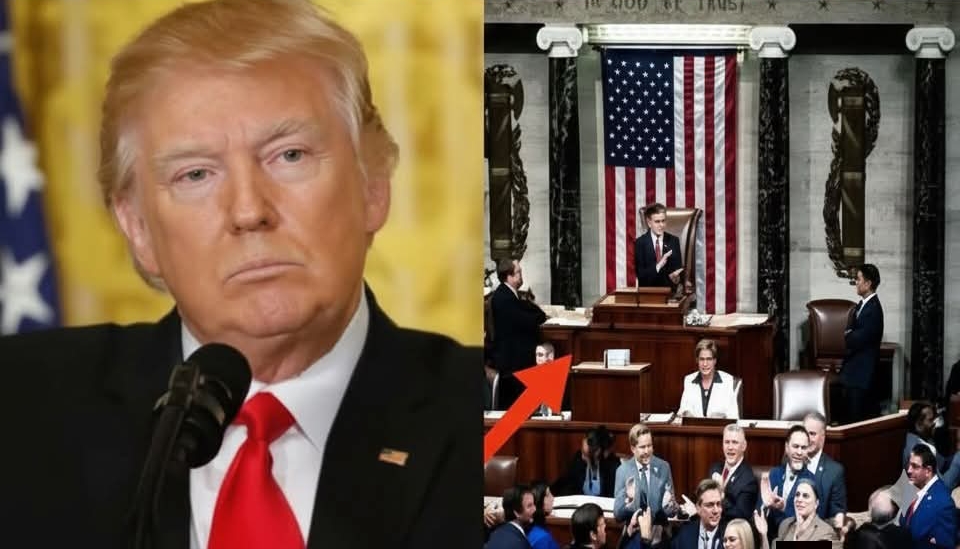
House Democrats have introduced a new impeachment resolution citing Article II, Section 4 of the Constitution, alleging that President Donald Trump has crossed constitutional limits.
The development marks a serious escalation in the ongoing political battles surrounding the former president, signaling a shift from partisan conflict to legal scrutiny.
This move, which has left Trump visibly shaken, is being described by lawmakers as a constitutional reckoning.
By grounding the resolution directly in Article II, Section 4 — the clause that allows for the removal of a president for treason, bribery, or other high crimes and misdemeanors — Democrats are framing this not as a political attack but as a defense of the constitutional system itself.
The resolution, H.Res. 939, is a fresh initiative, distinct from previous impeachment efforts, and carries a weighty message for both the president and Congress.
The timing could not be more explosive. With the 2026 midterms approaching, this resolution forces Republicans to take clear public positions on Trump’s conduct, creating a permanent record that will likely influence campaign strategies and voter perceptions.
Even if the resolution does not ultimately lead to a conviction, it significantly intensifies scrutiny of the former president and keeps questions of legitimacy and accountability at the forefront of national debate.
Democrats point to a consistent pattern in Trump’s behavior as justification for the impeachment resolution.
They cite escalating clashes with the courts, repeated defiance of congressional oversight, abuse of executive power, and an apparent disregard for constitutional limits.
In their view, this is no longer a matter of policy disagreements or partisan disputes; it is about protecting the rule of law and the integrity of the American constitutional system.
The resolution’s implications extend beyond the immediate political landscape. For Republicans, the need to publicly respond creates a pressure point, forcing lawmakers to either defend Trump’s actions or distance themselves, all while under the intense scrutiny of voters.
For the American public, the development highlights the fragility and significance of constitutional norms in an era of heightened political polarization.
As the situation unfolds, legal experts, lawmakers, and political analysts alike are weighing the potential outcomes.
While a conviction remains uncertain, the introduction of this resolution alone signals a historic moment in U.S. politics — one that could reshape debates about presidential power, accountability, and the role of Congress in upholding constitutional limits.
The United States is now facing a highly unusual and serious political moment, one where the line between politics and legality is being tested like never before.
With the midterms approaching and scrutiny intensifying, all eyes are on how Congress, the courts, and the public will respond to this unprecedented constitutional challenge.






BREAKING: ICE Agent Shoots and Kills Woman in Broad Daylight in Minneapolis — Reports Say Agents Blocked Doctor and Ambulance as Mayor Explodes, Trump Blames Others, Shocking Video Surfaces, and Identities Are Finally Revealed

Trump SHAKEN as House Democrats Drop Article II, Section 4 Impeachment Bombshell, Forcing Republicans on Record Ahead of the Midterms

Trump REVEALS 2026 Election Cancellation Talk as He BOASTS Democrats Can’t Impeach Him — Then Jack Smith and Others UNLEASH 1,000 Reasons That Expose Trump’s Most Fearful Moment Yet

Experts Flag Shocking Detail in Trump’s Venezuela War Room Photos as Questions About His Health Resurface

BREAKING: Internet Erupts After Explosive Claim That Pam Bondi and Kristi Noem Are “About To Be Tried in The Hague”

WHAT??? Trump Was Just SLAPPED With a $310M Lawsuit in Palm Beach County, Alleging That He Ran a “Trffckng Vntr” That Was “Identical in Every Material Respect” to the One Run by Jeffrey Epstein.

America Bursts Into Laughter After Hilarious Video of Sleepy President Donald Trump Falling From His Seat at Important Full Cabinet Press Conference, Having a Hard Time After Pulling a Raging All-Nighter on Truth Social and Posting Well Over 160 Times in an Hour

JUST IN: Taylor Swift Plans an Elaborate Multi-Day Wedding With a Massive Guest List — Plus, Her Lavish Bachelorette Trip Across 20 Countries Revealed, as Star-Studded Bridal Party Preps Worldwide. Insider Claims She Wants a Full Friday-to-Sunday Wedding Experience “Unlike Anything Ever Done”… But Fans Are Split After Reports She’ll Send Invitations to the First 200 Fans — With a Condition That Feels Like Classic Taylor Marketing

Taylor Swift Calls Out Donald Trump’s ICE After Officers Assaulted a Pregnant U.S. Citizen and Threw Her to the Ground, Causing a Miscarriage — and She Didn’t Hold Back, Then Did the Sweetest, Most Comforting Thing for the Grieving Mother Who Lost Her Child

Travis Kelce and Taylor Swift Release Their Highly Anticipated Wedding Invitations, Captivating Fans Worldwide Just Days After Heartbreaking Loss to the Cowboys

BREAKING: Taylor Swift Joins NYC Protesters to Block and Confront 600 ICE Agents Attempting a Massive Chinatown Raid — Stopping What Many Called “Mass Kidnappings” Through Powerful Resistance, Standing Her Ground While Chanting “Stay Out of NYC,” as Viral Photos Capture the Popstar’s Defiant Moment of Protest
