
NEWS
Trump REVEALS 2026 Election Cancellation Talk as He BOASTS Democrats Can’t Impeach Him — Then Jack Smith and Others UNLEASH 1,000 Reasons That Expose Trump’s Most Fearful Moment Yet

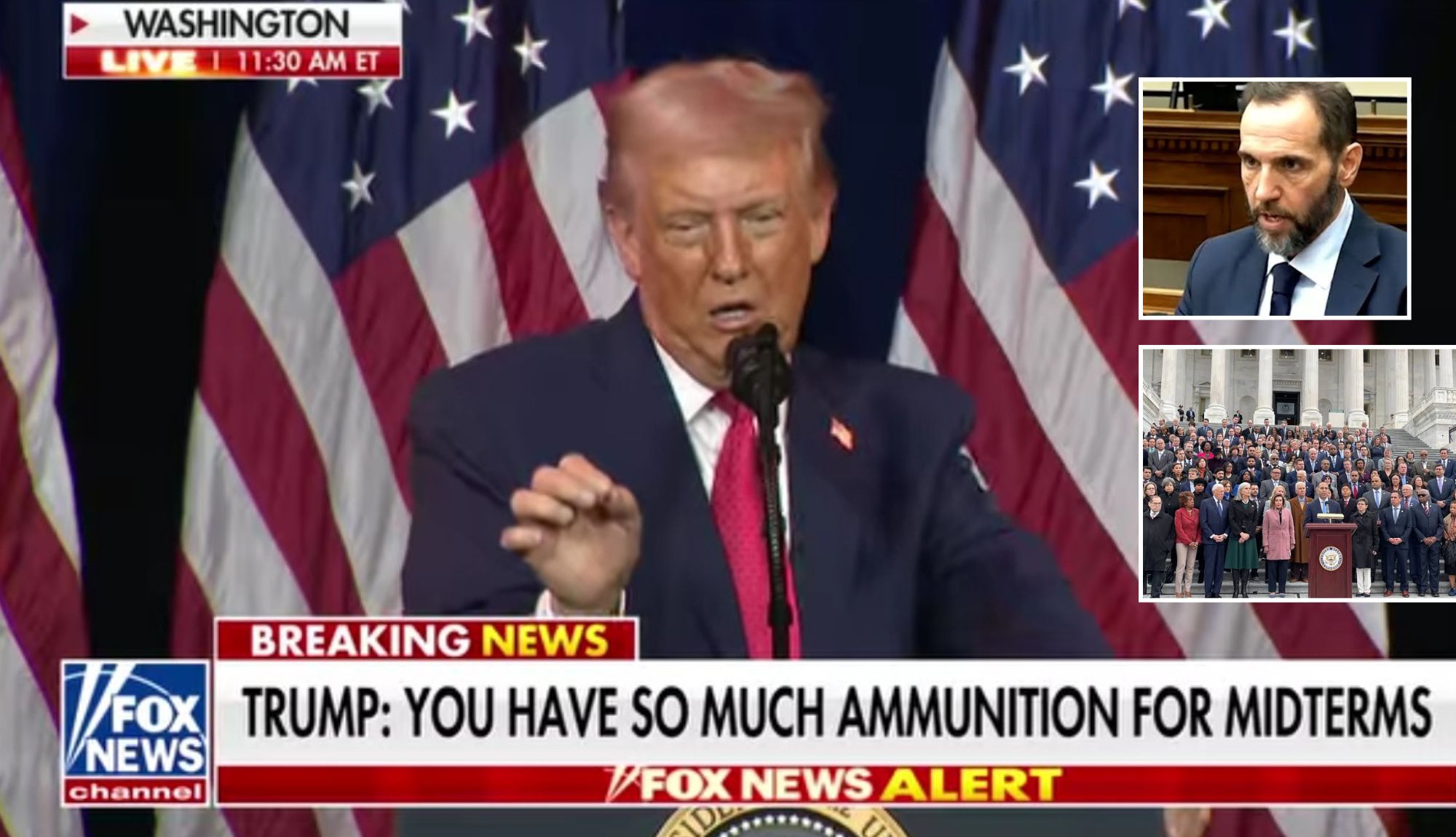
Donald Trump REVEALS Plans to Cancel the 2026 Election as He BOASTS of Winning the Midterms Because Democrats “Can’t Impeach Him” — Then Democrats, Jack Smith, and Others UNLEASH 1,000 Reasons That Spark Trump’s Most Fearful Statement Yet, Leaving Americans Asking: “So Trump Can Be Afraid?”
The political temperature in Washington surged overnight after Donald Trump made remarks that instantly set off alarms across the country.
Speaking with trademark confidence, Trump openly boasted that the upcoming midterms were already decided in his favor, claiming Democrats were powerless to stop him because, in his words, they “can’t find a reason” to impeach him.
But it was what followed that stunned even longtime observers of Trump’s political career. In the middle of his victory lap, Trump floated the idea that the 2026 election itself could be canceled, reframed, or rendered unnecessary under what he described as extraordinary circumstances.
The statement ricocheted through political media within minutes. For supporters, it sounded like another instance of Trump exaggerating his dominance and trolling his opponents.
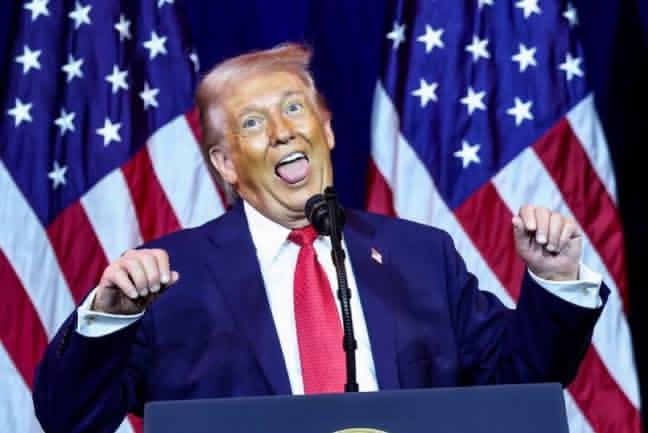
For critics, it crossed into something far more serious: a sitting political force openly questioning the future of democratic elections while celebrating what he framed as total immunity from accountability.
Trump appeared energized, almost daring Democrats to respond, repeatedly insisting that they had tried everything and failed.
But that confidence did not last long.
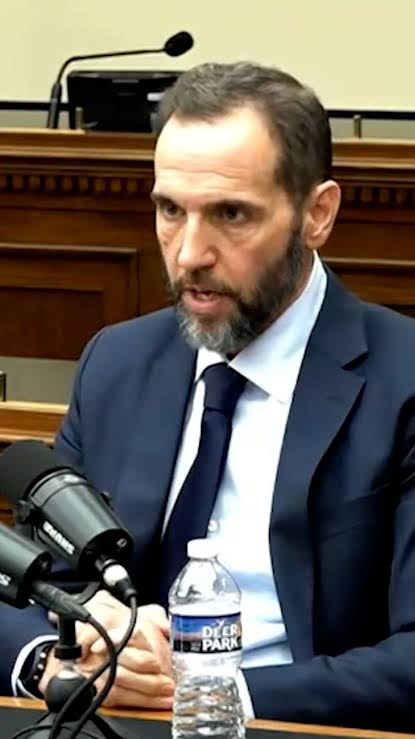
Within hours, Democrats, legal analysts, and figures tied to ongoing investigations began pushing back aggressively. Names long associated with Trump’s legal troubles resurfaced, including special counsel Jack Smith, whose investigations have remained a looming shadow over Trump’s political ambitions.
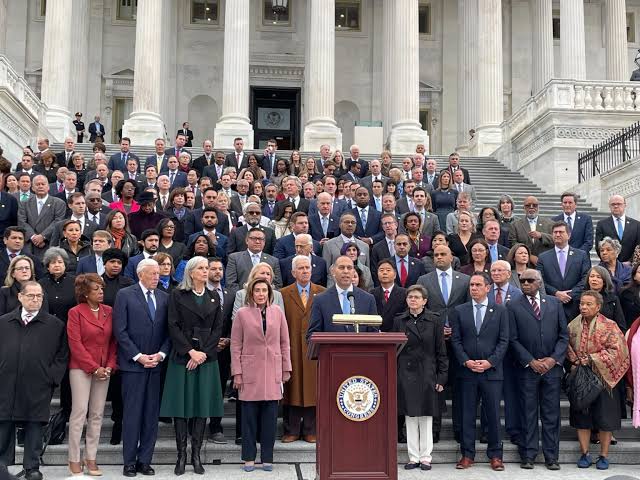
What followed was not a single accusation or one dramatic announcement, but a flood. Court filings, legal analyses, investigative reminders, and public statements poured out in rapid succession. Commentators began referring to it as “a thousand reasons” — not literally numbered, but overwhelming in volume and scope.
Suddenly, the narrative shifted. Trump’s earlier bravado collided head-on with a renewed focus on unresolved legal exposure, constitutional limits, and the reality that impeachment is not the only mechanism of accountability. Analysts noted that Trump’s claim that Democrats “can’t impeach him” ignored the broader legal landscape entirely.
Impeachment, they argued, was never the only threat. Criminal investigations, court rulings, and electoral consequences all remained very much alive.
Then came the moment that truly caught public attention.
As questions mounted and pressure intensified, Trump issued a statement that sounded noticeably different from his earlier tone. Gone was the casual boasting.
In its place was language that many interpreted as defensive, even anxious. He warned of “weaponized systems,” “unfair persecution,” and forces “trying to destroy the will of the people.” To some, this sounded familiar. To others, something felt off. The words carried urgency, not swagger.
They felt reactive, not triumphant.
Across social media and cable news panels, a question began circulating that few Americans had ever seriously asked before: was Donald Trump afraid?
For years, Trump cultivated an image of political invincibility.
Legal threats rolled off him. Scandals hardened his base rather than weakening it. Attacks became fuel. Fear was something Trump projected onto others, not something associated with him personally. Yet this moment felt different.
The timing was impossible to ignore. He spoke boldly about canceling an election, declared Democrats helpless, and almost immediately faced a coordinated reminder of just how many unresolved dangers still surrounded him.
Political psychologists noted that Trump’s most aggressive statements often surface when he feels cornered, not when he is secure. The suggestion of canceling an election, they argued, may have been less about power and more about anxiety — a preemptive strike against a future he cannot fully control.
If elections remain the final judge, then elections remain a risk.
Democrats seized on the shift. Some framed Trump’s fearful tone as proof that accountability still matters. Others warned that his rhetoric itself posed a danger, regardless of whether he could act on it.
The idea that a major political figure could casually entertain election cancellation, they argued, was itself a line that should never be crossed.
Trump’s supporters dismissed the backlash as hysteria, insisting his comments were taken out of context or deliberately distorted.
But even among allies, there was an undercurrent of concern. Several conservative commentators urged Trump to clarify his remarks, suggesting the issue was no longer just political theater but a credibility test.
As the dust settled, one reality became clear: Trump’s attempt to project absolute dominance backfired. Instead of closing the conversation, it reopened every unresolved question about power, accountability, and the rule of law. The “1,000 reasons” unleashed by Democrats and investigators may not all land at once, but collectively they reminded the country that no amount of boasting erases legal gravity.
And so the question lingers, louder than before. If Donald Trump truly believed he was untouchable, why the sudden defensiveness? Why the warnings? Why the fear-tinged language?
For a man who built his brand on never backing down, even the appearance of fear has become the story.
And for millions of Americans watching closely, the most unsettling part may not be what Trump said about elections — but what his reaction revealed when challenged.


BREAKING: ICE Agent Shoots and Kills Woman in Broad Daylight in Minneapolis — Reports Say Agents Blocked Doctor and Ambulance as Mayor Explodes, Trump Blames Others, Shocking Video Surfaces, and Identities Are Finally Revealed

Trump SHAKEN as House Democrats Drop Article II, Section 4 Impeachment Bombshell, Forcing Republicans on Record Ahead of the Midterms

Trump REVEALS 2026 Election Cancellation Talk as He BOASTS Democrats Can’t Impeach Him — Then Jack Smith and Others UNLEASH 1,000 Reasons That Expose Trump’s Most Fearful Moment Yet

Experts Flag Shocking Detail in Trump’s Venezuela War Room Photos as Questions About His Health Resurface

BREAKING: Internet Erupts After Explosive Claim That Pam Bondi and Kristi Noem Are “About To Be Tried in The Hague”

WHAT??? Trump Was Just SLAPPED With a $310M Lawsuit in Palm Beach County, Alleging That He Ran a “Trffckng Vntr” That Was “Identical in Every Material Respect” to the One Run by Jeffrey Epstein.

America Bursts Into Laughter After Hilarious Video of Sleepy President Donald Trump Falling From His Seat at Important Full Cabinet Press Conference, Having a Hard Time After Pulling a Raging All-Nighter on Truth Social and Posting Well Over 160 Times in an Hour

JUST IN: Taylor Swift Plans an Elaborate Multi-Day Wedding With a Massive Guest List — Plus, Her Lavish Bachelorette Trip Across 20 Countries Revealed, as Star-Studded Bridal Party Preps Worldwide. Insider Claims She Wants a Full Friday-to-Sunday Wedding Experience “Unlike Anything Ever Done”… But Fans Are Split After Reports She’ll Send Invitations to the First 200 Fans — With a Condition That Feels Like Classic Taylor Marketing

Taylor Swift Calls Out Donald Trump’s ICE After Officers Assaulted a Pregnant U.S. Citizen and Threw Her to the Ground, Causing a Miscarriage — and She Didn’t Hold Back, Then Did the Sweetest, Most Comforting Thing for the Grieving Mother Who Lost Her Child

Travis Kelce and Taylor Swift Release Their Highly Anticipated Wedding Invitations, Captivating Fans Worldwide Just Days After Heartbreaking Loss to the Cowboys

BREAKING: Taylor Swift Joins NYC Protesters to Block and Confront 600 ICE Agents Attempting a Massive Chinatown Raid — Stopping What Many Called “Mass Kidnappings” Through Powerful Resistance, Standing Her Ground While Chanting “Stay Out of NYC,” as Viral Photos Capture the Popstar’s Defiant Moment of Protest
