
NEWS
BREAKING: Donald Trump Faces Heavy Backlash and Impeachment Calls After a Reporter Asks, “You Said Putin Is Your Friend. Russia Is Iran’s Biggest Ally. Do You Believe Putin Is a Friend to America?” and Trump Responds, “I Can’t Speak for America,” Before Making Another Shocking Remark About His Agreement With Putin That the US Is to Blame for the War in Ukraine, Raising Bigger Questions About His Presidency and Calls for His Immediate Resignation

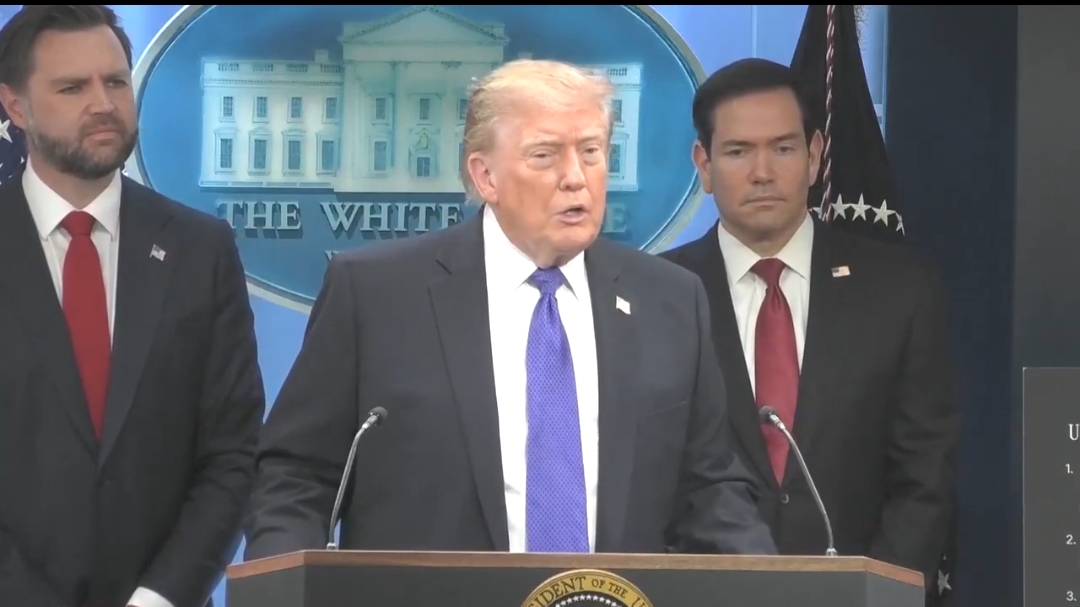
Donald Trump is facing renewed criticism over his relationship with Vladimir Putin after controversial remarks about the American government’s role in the war in Ukraine resurfaced.
The comments have reignited questions about Trump’s attitude toward Russia, his understanding of American foreign policy and his unusual relationship with the Russian president.
The controversy centres on Trump’s previous assessment of the events leading to Russia’s invasion of Ukraine and his criticism of American leadership.
According to a Newsweek report published in 2022, Trump suggested that the United States had helped create circumstances that encouraged Putin’s decision to invade Ukraine.
His remarks attracted considerable attention because they appeared to shift some responsibility for the conflict away from Moscow and toward Washington.
The former president had repeatedly criticised the Biden administration’s handling of Russia, arguing that the invasion could have been prevented through different diplomatic decisions.

However, his comments also raised concerns among critics who believed his approach gave Putin unnecessary political cover.
For many Americans, the question surrounding Trump’s relationship with Putin has remained particularly sensitive because Russia’s invasion fundamentally changed European security.
Ukraine became the centre of an international conflict involving military assistance, economic sanctions, diplomatic negotiations and growing tensions between Russia and Western governments.
The United States has played a significant role in supporting Ukraine, providing military equipment, financial assistance and diplomatic backing throughout the conflict.
Consequently, any suggestion that Washington bears responsibility for Putin’s decision has generated strong reactions across America’s political landscape.
Trump’s comments have repeatedly placed him at the centre of debates about whether his approach toward Moscow would fundamentally change American foreign policy.
His supporters argue that maintaining communication with Putin could create opportunities for negotiations and potentially prevent further bloodshed.
They believe a president should be willing to speak with international leaders, including those whose governments have serious disagreements with Washington.
Critics, however, worry that Trump’s praise of Putin could weaken America’s position and undermine the interests of countries threatened by Russian aggression.
The disagreement reflects a broader political divide over how Washington should approach Russia and what role diplomacy should play in ending the war.
Trump has frequently presented himself as someone capable of negotiating directly with powerful foreign leaders and securing agreements that previous administrations could not achieve.
That confidence has become an important part of his political identity, particularly when discussing international conflicts and America’s relationship with major world powers.
Nevertheless, his comments about Ukraine have continued to generate questions about where he places responsibility for the conflict.
The situation is particularly complicated because Russia launched its full-scale invasion of Ukraine in February 2022, crossing internationally recognised Ukrainian borders.
Moscow has offered various justifications for its military actions, but Ukraine and its Western partners have rejected those explanations.
The invasion has resulted in enormous destruction, displacement and casualties, while creating one of Europe’s most serious security crises in generations.
Against that background, Trump’s remarks about American responsibility have remained controversial among politicians, foreign policy experts and ordinary citizens.
Some critics believe blaming Washington risks overlooking Putin’s decision to launch the invasion and the responsibility of the Russian government.
Others argue that examining earlier American and European foreign policy decisions is legitimate when discussing the origins of the conflict.
However, analysing diplomatic history is different from excusing a military invasion or denying Russia’s responsibility for its actions.
That distinction remains central to the continuing debate surrounding Trump’s comments and his broader approach to the Russian president.
The controversy also raises questions about the future of American support for Ukraine and whether Washington would maintain its existing commitments under Trump’s leadership.
European governments have closely watched American political developments because continued United States assistance remains important to Ukraine’s defence.
Any significant change in Washington’s position could therefore affect negotiations, military planning and the wider balance of power across Europe.
For Ukraine, the central concern is whether any proposed peace agreement would protect its sovereignty and prevent another Russian invasion.
For Russia, negotiations could provide an opportunity to secure political and territorial concessions that Moscow has pursued throughout the conflict.
These competing interests explain why Trump’s statements about Putin and Ukraine attract such intense international attention.
His willingness to criticise American policy while speaking about Russia has also become an important issue during discussions about presidential leadership.
Americans who support a tougher approach toward Moscow may view his comments as troubling, while others may consider them an argument for diplomatic engagement.
The disagreement is unlikely to disappear because the war continues to influence American politics, international relations and discussions about national security.
Although Trump’s remarks have encouraged renewed criticism, impeachment and resignation are separate constitutional and political questions that cannot be established by controversy alone.
Ultimately, the debate surrounding Trump, Putin and Ukraine goes beyond one controversial statement and touches on America’s responsibilities as a global power.
As Americans continue examining Trump’s foreign policy positions, his approach toward Russia will remain one of the most closely watched aspects of his presidency.

BREAKING: KING CHARLES SUDDENLY COLLAPSES AND FAINTS Moments After Leaving the Royal Albert Hall Following the Royal Variety Performance, as Reporters Rush to the Scene and Capture the Moment, but One Journalist’s Camera Accidentally Reveals QUEEN CAMILLA’S Reaction Moments Before His Fall, Raising Serious Questions About Why She Did It

BREAKING: Donald Trump Faces Heavy Backlash and Impeachment Calls After a Reporter Asks, “You Said Putin Is Your Friend. Russia Is Iran’s Biggest Ally. Do You Believe Putin Is a Friend to America?” and Trump Responds, “I Can’t Speak for America,” Before Making Another Shocking Remark About His Agreement With Putin That the US Is to Blame for the War in Ukraine, Raising Bigger Questions About His Presidency and Calls for His Immediate Resignation

BREAKING: Donald Trump suffers an embarrassing wardrobe malfunction as he dances weirdly to YMCA at the APEC Summit in China in newly released video, but despite his attempts to hide it, one camera angle accidentally captures a shocking detail revealing what is causing the bulge at his backside and what Americans never expected a US President to do, raising bigger questions about his presidency and calls for his resignation

BREAKING: Donald Trump suddenly crashes to the ground and faints moments after finishing his conversation with journalists following his return to the United States from the 2026 APEC Summit in China, as journalists rush to his side and accidentally capture his swollen back bulge and nearly falling toupee, but what one journalist’s camera reveals moments before his fall raises serious questions about why he was still elected president

BREAKING: Donald Trump looks completely furious, visibly screaming at staff before hobbling down the stairs of Air Force One after arriving back in the United States from the 2026 APEC Summit in China, but an open microphone accidentally captures everything Trump was shouting about, raising serious questions about why he is still president

BREAKING: President Trump looks completely exhausted and sick after arriving back at the White House in the United States following the APEC Summit with President Xi Jinping and Putin in China, as cameras mistakenly capture his new brunette toupee nearly falling off because it wasn’t properly attached. But what the microphone captures sparks massive reactions about why he is not immediately resigning

BREAKING: President Trump suffers another embarrassing wardrobe malfunction while meeting President Putin at the APEC Summit, as cameras capture a noticeable bulge coming out from the back of his suit. But another shocking detail caught on camera as reporters are chased out of the room strongly confirms what Americans have been saying he wears all along

Prince William and Kate Middleton Return from Royal Tour in Mumbai, Their Romantic and Playful Moments Steal the Spotlight During an Intimate Beach Vacation in the UK, but Kate’s Unexpected New Appearance Leaves Fans Stunned and Raises Big Questions

BREAKING: President Trump attempts to sweetly hold President Xi’s hands to help him on an escalator at the 2026 APEC Summit, but cameras accidentally catch him attempting something that makes Xi hold his arms instead, and the microphone also captures this

BREAKING: President Trump completely falls asleep and farts during the APEC summit in China, but cameras capture the reactions of world leaders behind him, while a microphone accidentally left on picks up something more than just farting, further confirming what Americans have been saying and raising bigger questions about why he is still president

BREAKING: President Trump almost got arrested at the 2026 APEC Summit for holding President Putin’s hand for too long and had to be cautioned to release it, but moments after letting go, cameras caught him doing something unusual that a president should never be caught doing, right in front of President Xi, while Putin looked visibly frustrated
