
NEWS
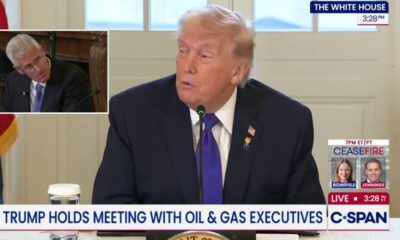
Trump Is MELTING DOWN — Oil Companies Don’t Want Venezuela’s Oil, and Now Taxpayers May Pay the Price

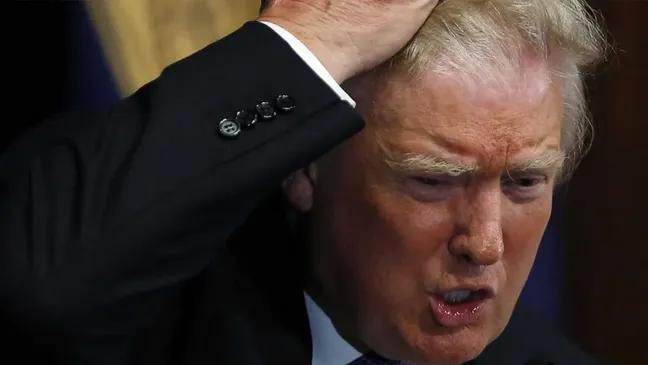
Donald Trump’s latest announcement on Venezuela’s oil was meant to sound bold, strategic, and victorious. Instead, it has triggered confusion, corporate hesitation, and a growing sense that the plan was announced before anyone serious agreed to touch it.
Trump has been openly pushing the idea that U.S. oil companies should move in, take control of Venezuela’s vast oil reserves, and turn them into a massive economic win for America. But behind the scenes, reality is setting in fast — and it’s not flattering.
Despite Venezuela holding some of the largest proven oil reserves in the world, major oil companies are not rushing to take over.
In fact, many of them want nothing to do with it. The reason is simple but devastating to Trump’s narrative: Venezuela’s oil industry is in ruins.
Years of neglect, corruption, sanctions, and political instability have left refineries barely functional, pipelines decaying, and production methods outdated by decades. Fixing it would require enormous investment, long-term security guarantees, and a level of political stability that simply does not exist.
Executives understand what Trump seems unwilling to admit publicly. Modernizing Venezuela’s oil sector would cost tens, possibly hundreds, of billions of dollars. Even then, profits would not come quickly.
It could take decades before companies begin to see meaningful returns, assuming conditions don’t collapse again. For corporations that already have safer, more predictable investments elsewhere, Venezuela looks less like an opportunity and more like a financial black hole.
Security concerns are another major obstacle. Oil operations require stable ground, protected infrastructure, and reliable enforcement of contracts. Venezuela offers none of that.
Armed groups, political unrest, and the lingering risk of regime shifts make long-term planning nearly impossible. No major oil company wants to pour billions into facilities that could be seized, sabotaged, or rendered useless by the next political crisis.
Then there’s the issue of trust. Venezuela has a long history of nationalizing foreign-owned assets, often without fair compensation. That memory has not faded in corporate boardrooms. Promises made today could easily be broken tomorrow, especially in a country still struggling to define its political future.
For oil executives, Trump’s assurances sound more like campaign bravado than binding guarantees.
As oil companies quietly back away, the uncomfortable question emerges: if private corporations won’t shoulder the risk, who will? Increasingly, the answer appears to be American taxpayers. Trump’s announcement hinted at government backing, protection, and financial support to make the deal “worth it” for companies.
Critics argue this means public money could be used to absorb the losses, cover security costs, or subsidize investments that private industry refuses to make on its own.
That’s where the political damage intensifies. Trump sold the plan as a win for American energy dominance, but it is beginning to look like a scenario where profits, if they ever materialize, would go to corporations, while the risks and costs would fall on the public. The idea that taxpayers might fund an unstable foreign oil gamble while domestic needs remain unmet is fueling backlash from both critics and uneasy supporters.
The situation has exposed a familiar pattern. Trump announces a sweeping, aggressive policy with confidence and spectacle, only for the details to unravel under scrutiny. What sounded like a masterstroke is now being described as reckless, unrealistic, and detached from economic reality. As oil companies hesitate and experts warn of long-term costs, Trump’s credibility on the issue continues to erode.
In the end, Venezuela’s oil isn’t the easy prize Trump portrayed. It’s a complex, damaged asset wrapped in political risk and financial uncertainty. And as the gap widens between Trump’s promises and corporate reality, the fear is growing that Americans will be left paying for an announcement that should never have been made without a plan.
What was meant to showcase strength is instead revealing desperation — and the fallout may only be beginning.




Travis Kelce and Taylor Swift Spotted Arriving Late at the 2026 Golden Globes in a Picture-Perfect Appearance Despite Not Being Nominated – Taylor Stuns in a Red Gown with Her Signature High-Knee Boots, but Fans Can’t Stop Talking About Travis Kelce’s Odd Outfit After 10 New Photos Drop. Yet That’s Not the Most Shocking Reveal, as the Reason Taylor Was Snubbed from All Nominations Has Finally Been Revealed

BREAKING: Trump DECLARED Himself that he’s “Acting President of Venezuela” by Posting on Truth Social, after The U.S. Senate recently passed a resolution blocking President Trump from taking any further military action in Venezuela and Greenland without Congress approval

JD Vance Goes FULL PANIC after Accidentally Liking Newly Shared Photo of Trump, Pete Hegseth, Kristi Noem, Kash Patel and Pam Bondi

After Her Death, Virginia Giuffre’s 400-Page Memoir Is Set to Expose the Hidden Truth Behind One of the World’s Darkest Scandals

EXPLOSIVE LEAK: Jack Smith’s Ironclad Evidence Virtually Guarantees Trump Behind Bars Soon? Sources Say There Is No Escape This Time as Fury and Panic Grip the MAGA Camp

BREAKING: Federal prosectors in Washington, D.C. have opened a criminal investigation into Federal Reserve chair Jerome Powell, escalating Trump’s effort to punish an independent central bank for refusing to bend to his political demands. The probe was approved by Trump stooge Jeanine Pirro, raising major alarm bells

Trump Is MELTING DOWN — Oil Companies Don’t Want Venezuela’s Oil, and Now Taxpayers May Pay the Price

The ICE Agent Jonathan Ross Who Shot and Killed Renee Good in Broad Daylight Is Forcibly Dragged Out of Hiding as New Undeniable Footage Blows the Case Wide Open While Kristi Noem and Washington Descend Into Panic

“HE HAS BEEN ARRESTED!” – The ICE Agent Who Killed Innocent Mom Renee Nichole Good Is Taken to Court as Explosive Revelations Shake America

BREAKING: Pop Icon Taylor Swift Submits Formal Petition to Congress Calling for the Dissolution of ICE, Citing the Fatal Shooting of Minneapolis Resident Renee Nicole Good and Arguing the Agency Has “Done More Harm Than Good” to American Communities, and you won’t believe Trump’s 7-words response to Taylor

Trump’s 2028 Plan Just LEAKED… It’s a Nightmare – Retaliation Threats, ICE Fallout, and a Chilling Warning From Congress That Signals What Comes Next
