
NEWS
America Bursts Into Laughter After Hilarious Video of Sleepy President Donald Trump Falling From His Seat at Important Full Cabinet Press Conference, Having a Hard Time After Pulling a Raging All-Nighter on Truth Social and Posting Well Over 160 Times in an Hour

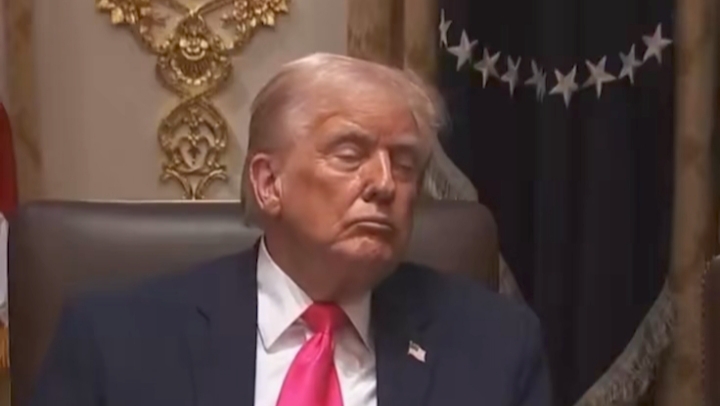
The internet exploded with laughter and disbelief Tuesday afternoon after a video surfaced showing President Donald Trump appearing visibly exhausted and ultimately tumbling from his chair during what was supposed to be a serious full cabinet press conference. The incident, which lasted only a few seconds but felt like an eternity to those in attendance, has already generated millions of views across social media platforms and sparked a national conversation about presidential stamina, social media addiction, and the demands of the highest office in the land.
According to multiple sources present at the press conference, the President had spent the previous night engaged in what can only be described as a marathon posting session on his preferred social media platform, Truth Social. Data tracking the President’s account activity revealed an astonishing posting rate of well over 160 posts within a single hour during the late-night and early-morning hours. The content ranged from policy announcements to personal grievances, cultural commentary to reposting supporter content, creating a digital trail that would prove prophetic for the events that unfolded the following day.
Attendees at the cabinet meeting described the President as noticeably different from his usual energetic self. Cabinet members exchanged glances as Trump struggled to maintain focus during the opening remarks, his eyes appearing heavy and his usual animated gestures notably subdued. Secretary of State officials later confirmed off the record that there had been concerns about the President’s alertness even before the formal press portion of the meeting began, with some advisers quietly suggesting the media availability be postponed.
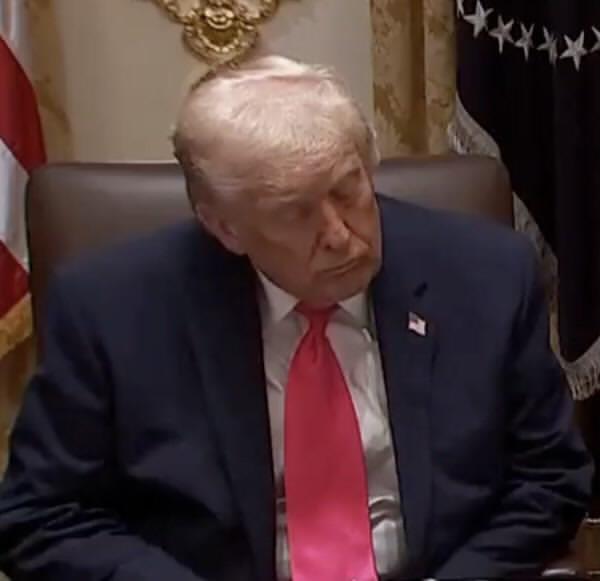
The moment that captured America’s attention came approximately twenty-three minutes into the press conference. As Treasury Secretary was mid-sentence discussing quarterly economic projections, cameras clearly captured the President’s head beginning to nod forward. What happened next unfolded in what witnesses described as almost slow motion. Trump’s body began to list to one side, his attempt to correct his balance proving insufficient, and within seconds the President of the United States had slipped completely off his chair and onto the floor of the cabinet room.
The immediate aftermath was a study in controlled chaos. Secret Service agents rushed forward while cabinet members jumped from their seats. The press pool, initially stunned into silence, erupted into a cacophony of camera clicks and shouted questions. For a brief moment, the gravity of a president falling during an official government proceeding hung heavy in the air. Then, as Trump was helped to his feet appearing more embarrassed than injured, an almost involuntary wave of nervous laughter rippled through the room.
What might have remained a somewhat contained embarrassment for the administration quickly became impossible to control once the video reached the public domain. Within an hour of the incident, the footage had been viewed over ten million times. By evening, that number had swelled to over fifty million across various platforms. The response from the American public was swift and merciless, with users creating countless memes, parodies, and commentary pieces dissecting every frame of the President’s tumble.
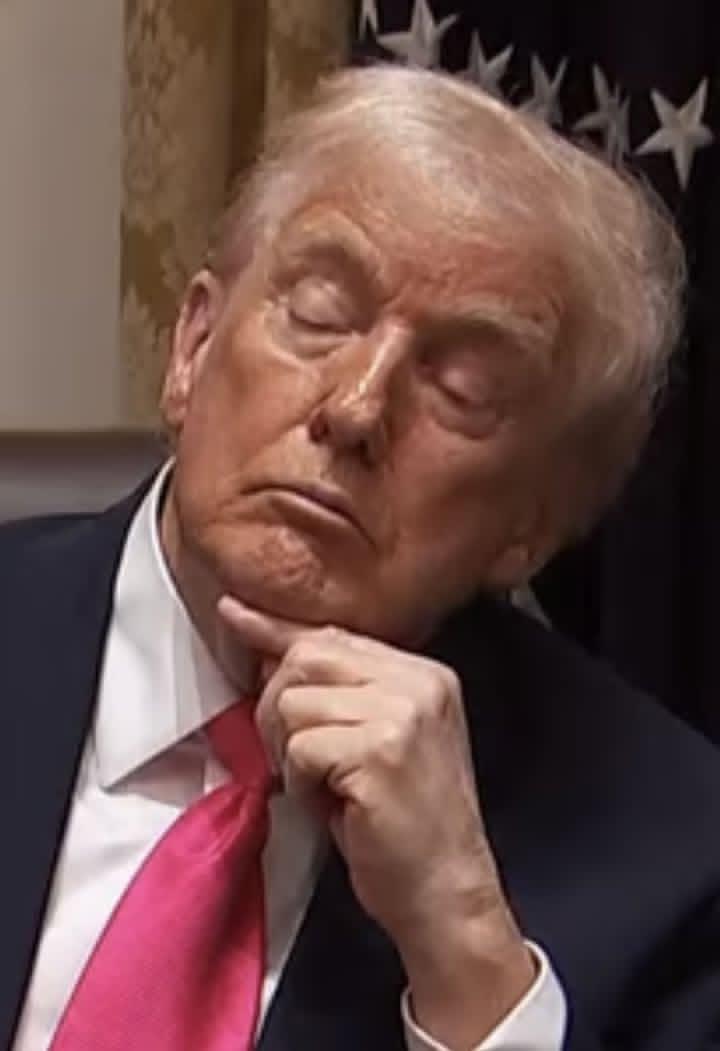
The humor, however, was not without its darker undertones. Medical professionals and sleep experts quickly weighed in on social media and news programs, expressing genuine concern about the President’s wellbeing. Dr. Michael Harrison, a sleep specialist at Johns Hopkins University, noted that the kind of extreme social media usage reported by White House sources, combined with the visible exhaustion and loss of motor control, suggested severe sleep deprivation that could have serious health implications. He emphasized that anyone, regardless of their position, operating on minimal sleep poses a danger not only to themselves but potentially to those who depend on their decision-making capabilities.
The White House’s response to the incident evolved throughout the day. Initial statements characterized the fall as a “minor stumble” caused by an “awkward chair position.” However, as evidence of the President’s all-night Truth Social session became impossible to deny, press secretary statements shifted to acknowledging that Trump had been working through the night on important communications with the American people. Critics were quick to point out that the distinction between “working” and “posting” might be worth examining.
Political opponents seized on the incident with predictable enthusiasm. Opposition party members called for assessments of presidential fitness and questioned whether someone who couldn’t manage their own sleep schedule should be trusted with managing the nation. Some went further, suggesting this was emblematic of a broader pattern of impulsive behavior and poor self-regulation that they argued had characterized the administration’s approach to governance.
Supporters of the President attempted their own spin on the narrative, praising Trump’s dedication to direct communication with citizens and characterizing the posting marathon as evidence of his tireless work ethic. Some suggested the media was overblowing a simple accident that could happen to anyone. Others pointed to the President’s age and the demanding nature of the office as mitigating factors that should elicit sympathy rather than mockery.
The Truth Social posting spree that precipitated the cabinet room incident revealed its own fascinating insights into the President’s state of mind during those late-night hours. Analysis of the posts showed an increasingly stream-of-consciousness quality as the night progressed, with later posts containing more typos, more exclamation points, and notably more combative language than earlier entries. The sheer volume of content produced in such a compressed timeframe raised questions about whether any meaningful consideration was being given to the potential consequences of each message.
Perhaps most striking was the reaction from everyday Americans, who seemed less divided on this issue than on most political matters. Comments across the political spectrum reflected a mixture of concern, amusement, and a certain degree of second-hand embarrassment. Many noted that the incident felt relatable in an unexpected way, as nearly everyone in the modern age has experienced the consequences of staying up too late scrolling through social media, even if the results are typically less dramatic than falling out of a chair during a cabinet meeting.
The incident has also reignited conversations about the role of social media in presidential communications and whether the direct-to-public approach, while appreciated by many for its transparency, comes with costs that outweigh the benefits. Former White House staffers from previous administrations noted that traditional communication protocols existed not to stifle presidential expression but to ensure that messages were carefully considered and that the President maintained the physical and mental stamina required for the job.
As America continues to process the spectacle of their President tumbling from his seat on live television, the lasting impact of this incident remains to be seen. Will it serve as a wake-up call regarding the demands being placed on elected officials in the age of constant digital connectivity? Will it prompt any changes in how the White House manages the President’s schedule and media presence? Or will it simply become another viral moment in the endless stream of content that defines modern political discourse, quickly forgotten as the next controversy emerges?
What seems certain is that the image of a sleep-deprived president losing his battle with gravity during an important government proceeding has provided Americans with a moment of unexpected unity through shared laughter, even as it raises serious questions about leadership, self-care, and the sometimes absurd intersection of traditional governance and social media culture in the twenty-first century.



America Bursts Into Laughter After Hilarious Video of Sleepy President Donald Trump Falling From His Seat at Important Full Cabinet Press Conference, Having a Hard Time After Pulling a Raging All-Nighter on Truth Social and Posting Well Over 160 Times in an Hour

JUST IN: Taylor Swift Plans an Elaborate Multi-Day Wedding With a Massive Guest List — Plus, Her Lavish Bachelorette Trip Across 20 Countries Revealed, as Star-Studded Bridal Party Preps Worldwide. Insider Claims She Wants a Full Friday-to-Sunday Wedding Experience “Unlike Anything Ever Done”… But Fans Are Split After Reports She’ll Send Invitations to the First 200 Fans — With a Condition That Feels Like Classic Taylor Marketing

Taylor Swift Calls Out Donald Trump’s ICE After Officers Assaulted a Pregnant U.S. Citizen and Threw Her to the Ground, Causing a Miscarriage — and She Didn’t Hold Back, Then Did the Sweetest, Most Comforting Thing for the Grieving Mother Who Lost Her Child

Travis Kelce and Taylor Swift Release Their Highly Anticipated Wedding Invitations, Captivating Fans Worldwide Just Days After Heartbreaking Loss to the Cowboys

BREAKING: Taylor Swift Joins NYC Protesters to Block and Confront 600 ICE Agents Attempting a Massive Chinatown Raid — Stopping What Many Called “Mass Kidnappings” Through Powerful Resistance, Standing Her Ground While Chanting “Stay Out of NYC,” as Viral Photos Capture the Popstar’s Defiant Moment of Protest

BREAKING: Patrick Mahomes’ Fiery Response to ‘Little Pig’ Insult Toward Female Reporter Shakes the NFL — Even Trump Is Stunned!

BREAKING: President Trump’s Critical Six-Word Response After Australia Moves to Become the First Western Nation to Permanently Ban Him, His Family, and His Former Administration — Sparking Other Countries to Consider Following

Commotion at the White House: A Thanksgiving turkey gets loose and suddenly flies onto President Trump’s head during the annual pardoning ceremony — the viral video has now exploded into memes

JUST IN: Taylor Swift Partners With Feeding America to Sponsor Thousands of Thanksgiving Meals Nationwide as Food Banks Celebrate the Holiday — Plus, She Reveals a ‘Special Surprise’ Thanksgiving Concert With a Mystery Guest

President Trump Unveils a Cringe New Thanksgiving Tradition in Costume as Vice President Vance Serves Troops at Fort Campbell With His Daughter, and Former President Obama and His Family Spend the Holiday Serving Veterans — A Supreme Court Ruling is Hanging Over Trump’s Controversial Celebration

BREAKING: President Trump White House Press Secretary Karoline Leavitt’s Family Member Has Been Captured by ICE — Despite Being a DACA Recipient Who Has Lived in the Country Illegally for 26 Years — Sources Reveal There Is More to the Detention Story Than the White House Is Letting On
