
CELEBRITY
Taylor Swift Calls Out Donald Trump’s ICE After Officers Assaulted a Pregnant U.S. Citizen and Threw Her to the Ground, Causing a Miscarriage — and She Didn’t Hold Back, Then Did the Sweetest, Most Comforting Thing for the Grieving Mother Who Lost Her Child

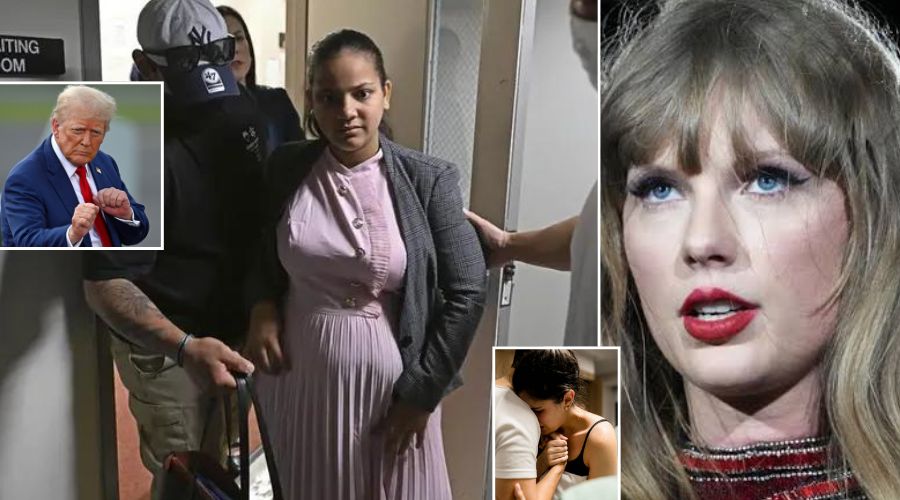
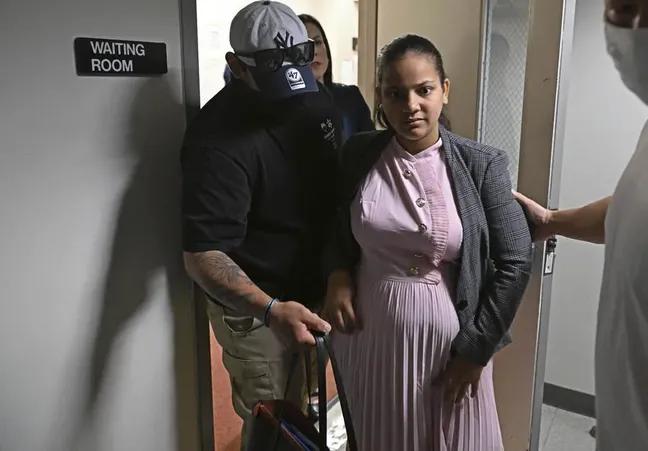
The story began with a shaky phone video — the kind that appears online without warning, already burning through every corner of the internet before anyone can fully understand what they’re watching. A pregnant woman, small-framed and terrified, stood on a Chinatown sidewalk clutching a grocery bag and her belly. Three ICE officers surrounded her, shouting orders that the microphone of the recording couldn’t quite catch. People nearby froze, unsure, the way crowds do when something horrific unfolds too fast for logic to keep up.
The moment that made the world gasp happened in one violent blur. One officer grabbed her arm. Another tried to restrain her. The third shoved her from behind. Her body hit the concrete with a sound the internet would never forget.
The video cut off right as a scream tore through the street.
Within hours, tens of millions had seen it. By morning, it was the only thing anyone was talking about. But no reaction traveled faster, or hit harder, than the one from Taylor Swift.
Her first response wasn’t a neatly prepared statement or a strategically timed tweet. It wasn’t polished. It wasn’t diplomatic. It wasn’t careful. It was raw fury — the kind that erupts when even celebrities, guarded by PR walls, have their human limits blown apart.
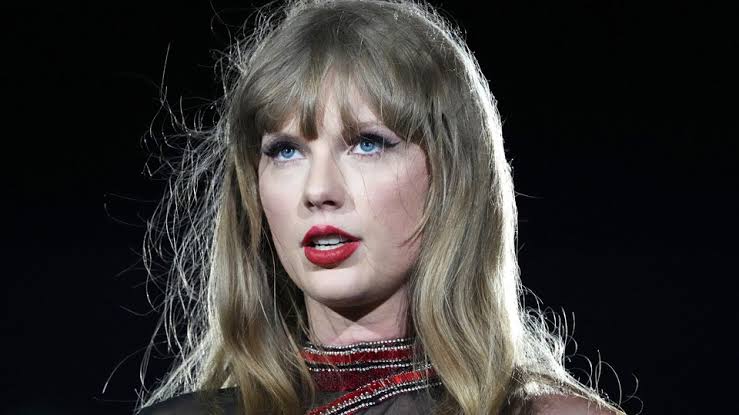
In a late-night livestream that went instantly viral, Swift appeared with no makeup, her hair slightly messy, her voice steady but filled with unfiltered anger. “This should not be happening in the United States of America,” she said. “A pregnant woman — a citizen — thrown to the ground like she’s not even a person. I don’t care who is in power. I don’t care which agency tries to spin it. This is violence. This is cruelty. And I won’t stay quiet about it.”
The clip detonated across the country.
People replayed it not because she was famous, but because she said what millions had been screaming inside their heads: that something had gone terribly, unforgivably wrong.
As the truth emerged — that the woman miscarried shortly after the assault — the atmosphere in the country shifted. News outlets treated it like the spark that might set the entire political climate on fire. ICE issued a sterile, careful statement full of legal language that only inflamed the public more. Politicians scrambled to position themselves as outraged or “concerned,” depending on which voters they were trying to keep happy.
But the only response that felt real came from Swift.
No one expected what she did next. The grieving mother, broken and pale, was recovering quietly in a small hospital room far from the noise of cameras. The world didn’t know her name yet. She hadn’t spoken publicly, and she didn’t plan to. She was shattered. She wanted silence, darkness, and time.
Then Swift showed up.
Not with photographers. Not with security guards pushing people aside. Not even with her usual entourage. Just herself, a hoodie pulled over her head, carrying a small box of flowers she’d arranged herself — pale blue hydrangeas tucked among soft white roses.
A nurse later said the moment the two women saw each other was the kind of thing you can’t describe without feeling it. Swift moved slowly, gently, sitting beside her as if she were a childhood friend rather than a stranger whose pain she’d only seen on a screen. She didn’t talk about politics. She didn’t talk about ICE. She didn’t talk about herself. She just held the woman’s hand and said, quietly, “You didn’t deserve this. Your baby didn’t deserve this. And I am so, so sorry.”
The woman broke down then, not with the loud kind of crying that fills a room, but the quiet, trembling kind that shatters the heart of anyone witnessing it. Swift didn’t look away. She stayed with her for hours, listening, comforting, promising that the world wouldn’t forget what happened.
By the time Swift left the hospital, the sky was turning a soft morning gray. She didn’t give a speech. She didn’t announce the visit. She didn’t even tell her team. But one nurse, unable to hold back the emotion of what she’d witnessed, quietly shared that Taylor Swift had spent the night comforting a mother who lost everything.
That single detail — whispered, not broadcast — spread everywhere.
And suddenly the story wasn’t just about violence, or agencies, or politics, or blame. It became about humanity. It became about a grieving mother whose suffering touched one of the world’s biggest stars so deeply that the celebrity disappeared, replaced by a person doing the simplest, sweetest thing someone can do: sitting beside another human being in their darkest moment.
The country still raged. Protests surged. Politicians scrambled. ICE faced unprecedented scrutiny. But in the middle of all the noise, the image of Taylor Swift — quietly comforting a woman who had lost her child — became the emotional heartbeat of the entire tragedy.
And long after the headlines faded, long after the debates died down, that moment remained: a superstar walking into a hospital room not for applause, not for cameras, but simply because she couldn’t sleep knowing a mother somewhere was crying alone.
The internet had seen the violence. But now it saw the healing too.
And that — more than anything — was what the world needed to remember.






Taylor Swift Calls Out Donald Trump’s ICE After Officers Assaulted a Pregnant U.S. Citizen and Threw Her to the Ground, Causing a Miscarriage — and She Didn’t Hold Back, Then Did the Sweetest, Most Comforting Thing for the Grieving Mother Who Lost Her Child

Travis Kelce and Taylor Swift Release Their Highly Anticipated Wedding Invitations, Captivating Fans Worldwide Just Days After Heartbreaking Loss to the Cowboys

BREAKING: Taylor Swift Joins NYC Protesters to Block and Confront 600 ICE Agents Attempting a Massive Chinatown Raid — Stopping What Many Called “Mass Kidnappings” Through Powerful Resistance, Standing Her Ground While Chanting “Stay Out of NYC,” as Viral Photos Capture the Popstar’s Defiant Moment of Protest

BREAKING: Patrick Mahomes’ Fiery Response to ‘Little Pig’ Insult Toward Female Reporter Shakes the NFL — Even Trump Is Stunned!

BREAKING: President Trump’s Critical Six-Word Response After Australia Moves to Become the First Western Nation to Permanently Ban Him, His Family, and His Former Administration — Sparking Other Countries to Consider Following

Commotion at the White House: A Thanksgiving turkey gets loose and suddenly flies onto President Trump’s head during the annual pardoning ceremony — the viral video has now exploded into memes

JUST IN: Taylor Swift Partners With Feeding America to Sponsor Thousands of Thanksgiving Meals Nationwide as Food Banks Celebrate the Holiday — Plus, She Reveals a ‘Special Surprise’ Thanksgiving Concert With a Mystery Guest

President Trump Unveils a Cringe New Thanksgiving Tradition in Costume as Vice President Vance Serves Troops at Fort Campbell With His Daughter, and Former President Obama and His Family Spend the Holiday Serving Veterans — A Supreme Court Ruling is Hanging Over Trump’s Controversial Celebration

BREAKING: President Trump White House Press Secretary Karoline Leavitt’s Family Member Has Been Captured by ICE — Despite Being a DACA Recipient Who Has Lived in the Country Illegally for 26 Years — Sources Reveal There Is More to the Detention Story Than the White House Is Letting On

BREAKING: Supreme Court Strikes Down Donald Trump’s Controversial “Ballroom Plan,” Declaring His Removal of the White House East Wing Unlawful and Directing Him to Rebuild the Historic Structure Without Using Taxpayer Funds

Erica Kirk gives a five-word response after news of her pregnancy for JD Vance and his divorce from his “weak” wife goes viral as Erica Kirk moves to align Turning Point support behind a Vance 2028 presidential run
